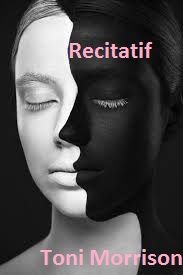
Recitatif. What does it mean?
It’s the French word for ‘recitative,’ which’s a vocal style that imitates ordinary speech. This type of vocal style’s typically found in operas, which depend on recitatives to move the story forward.
‘Imitating the ordinary’ was exactly Morrison’s intent. Though Oscar Wilde famously declared that life imitates art, Morrison accomplished the exact opposite — her art imitates life. In her story, everything that happened, every gesture, and every word spoken mimicked those of real living people.
Just like the acts of a play, Recitatif is a story told in five parts, each part providing a snapshot of the main characters’ life at the given moment.
Act I
The first act introduced Twyla and Roberta, both eight years old and wards of the state because their mothers were unable to care for them. Aside from the color of their skin, they were more alike than different.
These girls were yet untainted by histories, indoctrination, and clash of interests between their own and others. Abandoned and knowing better than to ask questions, the girls bonded over their common ground (they were the only two children at the orphanage with living mothers and were terrible students) and their common enemy (the teenage girls who bullied them and other young kids). Even the prejudice-fueled hostility between their mothers couldn’t harm their friendship.
Four months later, they parted ways. The next time they met would be more than a decade later and under vastly different circumstances.
Act II
It was the sixties, America was in the middle of the civil rights movement. Reaching adulthood during that period of political turmoil, the two young women of opposite races formed very different opinions of what was going on.
When a Greyhound bus brought Roberta to the diner Twyla worked at, Twyla was eager to reunite. Roberta, on the other hand, wasn’t keen on publicly acknowledging a friend of the opposite race.
The women parted like strangers.
Act III and IV
Twelve years went by before Twyla and Roberta saw each other again. In the meantime, both had gotten married. One to a Newburgh native and living a lower middle-class life. The other, to a rich widower. In their marriage and daily life, they couldn’t be more different from each other.
After an episode of friendly reminiscing, Twyla and Roberta returned to the present and their respective racial and social class. Unlike before, the impact of racial politics on their daily lives was no longer limited to the social stigma of having a friend of the opposite race. It threatened to change their very way of life. It forced their children to integrate into schools originally for the opposite race.
The chasm between their social status and the color of their skin drove the wedge between them deeper than ever. Their shared history was no longer lubricant but ammunition against the other. This time, when they parted, it wasn’t as near strangers, but as enemies on the opposite sides of a divisive racial issue.
Act V
The final act took place one Christmas four to five years later. Vitriol from the earlier period of school integration had faded with time. Replacing it was resignation, indifference, and, finally, shared reflection.
Morrison made it clear early in the story that her two main characters were of the opposite race (one White American and one Black American). But she stopped short of revealing which was which. Like perhaps most readers of the story, I spent much of the book and several rereads looking for and analyzing the clues Morrison laid out.
Was a Black mother more likely to neglect her child in favor of dancing all night or a White mother? Was a Black mother more likely to be overly religious or a White mother? Was a Black child more likely to be illiterate at the age of eight or a White child? Who’s more likely to marry rich and abruptly move up the social echelon? Which mother’s more likely to protest against school integration?
For me, the puzzle of Twyla’s and Roberta’s race solved itself with the last question. Try as I might to remain open-minded, I simply couldn’t envision a Black mother protesting against school integration, and by extension, desegregation.
Working backward, other clues also point to Twyla being Black and Roberta being White: Twyla mentioning the junior high her son was being bused to was a nicer school than the one he originally intended (we all know that under Jim Crow laws, ‘separated’ was diligently enforced, ‘equal’ was not); Roberta replying that her husband worked in computer science (a field that’s almost exclusively white in the seventies); Twyla’s husband’s family being in Newburgh for generations when Newburgh was a city hit by ‘white flight’…
Ultimately, the races of Twyla and Roberta don’t matter. Twyla and Roberta don’t represent their respective races but people as a whole. Neither of them ever exhibited racial characteristics unique to a certain race. Nor did they act, speak, or look like a member of a certain race. Through purposeful racial ambiguity, Morrison challenged us to take a good hard look at ourselves and reflect: When deprived of confirmation bias, can we truly tell a character’s race from her background, her style of speaking, and her thoughts and actions?
Just how much does prior knowledge of a character’s (or a person’s) race influence how we perceive them?
What about other physical traits, like gender and disabilities?
Remember Maggie? I’m sure you do, just as Twyla and Roberta remembered her decades later. Maggie was the pariah, the albatross around both Twyla’s and Roberta’s necks, the ultimate victim. Bearing witnesses to what happened to her had a lasting effect on both girls. When Maggie was pushed down by the ‘gar girls’ and beaten, both girls were at once terrified and secretly pleased. In the decades that followed, both attempted to come to terms with that shameful sadism they felt.
“Maggie was my dancing mother,” Twyla confessed, “… she wouldn’t scream, couldn’t — just like me and I was glad about that.”
Twyla’s confession provided a telling insight into the darker side of her psyche. In associating Maggie with her neglectful mother, Twyla projected her anger toward Mary onto Maggie. The ‘gar girls’ knocking down Maggie and beating her was what should have happened to Mary.
But in a seemingly conflicting twist, Twyla also projected herself onto Maggie. Despite being born healthy, Twyla was like Maggie, neglected, uncared for, and unheard. Maggie couldn’t scream due to physical disability; Twyla couldn’t scream because no one would understand and, worse, because no one would care. All Twyla ever felt was helplessness. And the helplessness of an unloved child took the ugly form of cruelty when one day she realized: There’s someone out there even weaker than herself.
And she was glad about that.